20 EXCELLENT REASONS FOR PICKING THE SCEYE PLATFORM
 April 19, 2026
Sceye HAPS Specifications That Include Payload, Endurance And Breakthroughs In Battery
1. Specifications will tell you what the Platform Will Actually Do
There's a tendency in the HAPS sector to focus on goals instead of engineering. Press releases discuss coverage areas partnerships, coverage areas, and commercial timelines, but the harder and more interesting discussion is about specifications – what the vehicle actually does and how long it is up for, and what energy systems are required to make a sustained operation possible. If you're trying understand the possibility of a stratospheric technology being real-time mission-capable or remains in the development phase of promising prototypes, Payload capacity, endurance rates and battery performance are the areas where the real substance is. Inconsistent promises to "long endurance" and "significant payload" are not difficult to understand. Delivering both simultaneously, at an altitude of above is the engineering challenge that separates credible programmes from announcements that are wildly ambitious.
2. The Lighter-than-Air Architecture Modifies the Payload Equation
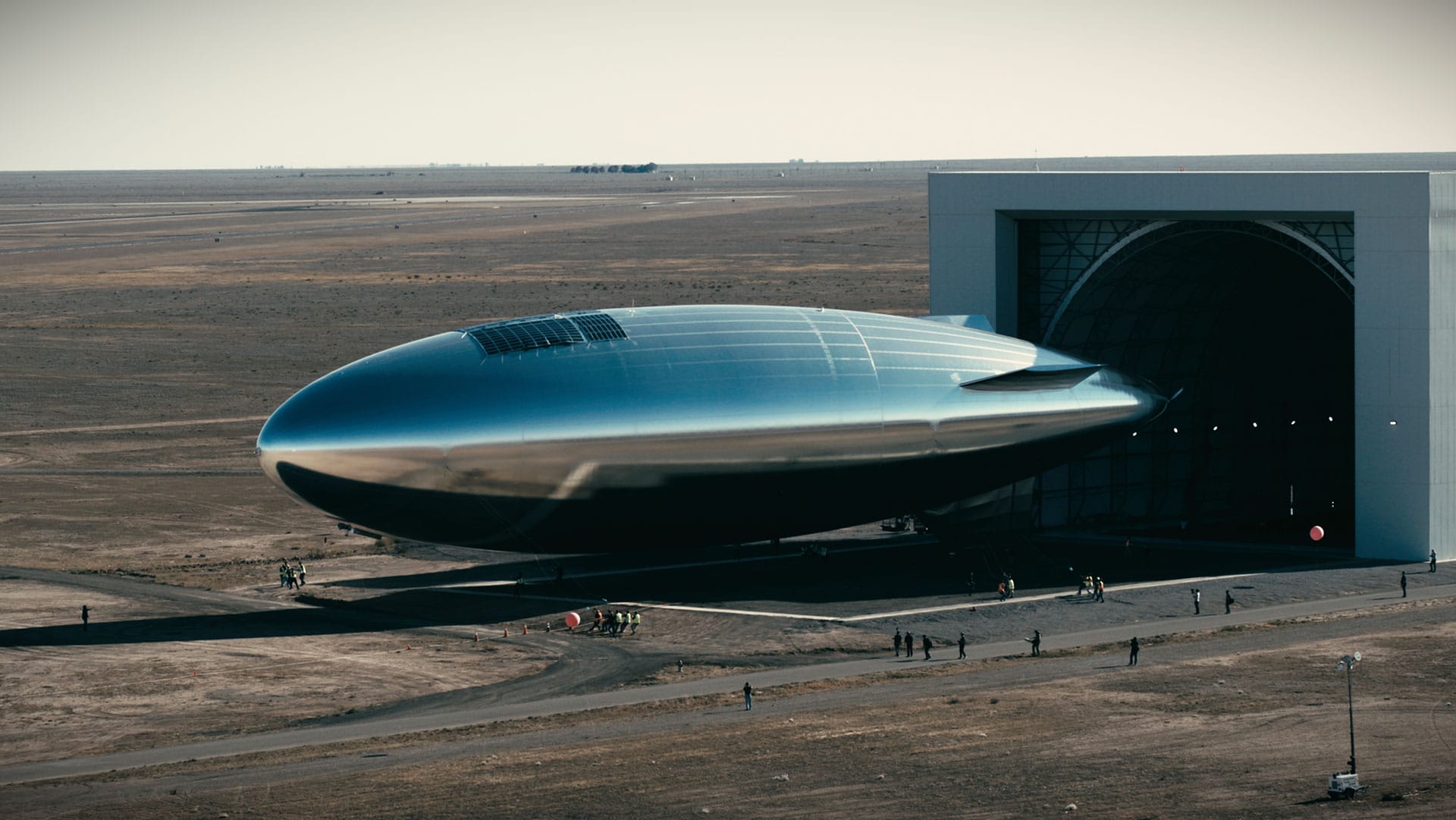
The reason the airship design has the capacity to carry significant payload is that buoyancy handles its primary function of keeping the car airborne. This is a significant distinction. Fixed-wing solar aircraft must generate aerodynamic thrust continuously that consumes energy and creates structural limitations which limit the amount of additional mass a vehicle can be able to carry. An airship that's floating in the stratosphere does not expend energy fighting gravity in the same manner, that means that the energy generated by its solar array, and the structural capability of the vehicle itself, can be channeled towards stations keeping, propulsion and the operation of the payload. It's the result of the payload capacity that fixed-wing HAPS designs with comparable endurance can't even come close to matching.
3. Payload Capacity is a determinant of mission flexibility
The true significance of higher payload capacity becomes clear when you look at what stratospheric objectives actually require. A telecommunications payload — antenna systems such as signal processing hardware, beamforming equipment — carries real weight and size. So does a greenhouse gas monitoring suite. Also, a wildfire detection and earth observation sensors package. The ability to run any of these tasks effectively requires equipment that is large. A multi-mission system requires more. Sceye's airship specifications were developed according to the notion that a spacecraft should be capable of carrying a efficient mix of payloads as forcing operators to pick between monitoring and connectivity since the vehicle isn't able to accommodate both at once.
4. Endurance is Where Stratospheric Missions Can Win or Lose
A platform that reaches the stratospheric height for up to 48 hours before needing to go down is great for demonstrating. An elevated platform that remains in place for months or even weeks at and is suitable for developing commercial services. The difference between the two results is nearly entirely related to energy — specifically, if the vehicle can produce enough solar energy during daylight to power all of its systems and charge its batteries adequately to enable its full functionality throughout the night. Sceye endurance targets are designed around this challenge to the diurnal rhythm in which we consider the ability to sustain energy for the entire night not as a flimsy goal but as a basic necessity that all the other aspects of design must be built around.
5. Lithium-Sulfur Batteries Are a True Step towards a Reversal
The battery chemistry used to power conventional consumer electronics and electric vehicles — mostly lithium-ion. It has energy density properties that cause real limitations for endurance-based applications at the stratospheric level. Each kilogram of battery mass carried aloft is a kilogram that's not used for payloads, and yet you'll need enough energy to keep a large platform functioning through a high-altitude night. Lithium sulfur chemistry can alter this equation substantially. With energy density values that reach 425 Wh/kg, batteries made of lithium can store a significant amount of energy per pound than comparable lithium-ion cells. In a vehicle which is weight-constrained, every gram of battery mass has an opportunity cost in payload capacity, that enhancement in energy density isn't incremental — it's architecturally significant.
6. The latest advances in solar cell efficiency are the Other Half of the Energy story
The battery's energy density is the measure of how much power you can keep. Solar cell efficiency determines the speed at which you can replenish it. Both are important, and advancement in one without progress in the other leads to a less-than-perfect energy architecture. The advancements in high-efficiency photovoltaic cells — such as multi-junction designs which capture a greater range of solar energy over conventional silicon cells — have meaningfully improved the amount of energy that can be harvested by HAPS powered solar vehicles during daylight hours. Combined with lithium-sulfur storage, these advances are what make the closed power loop possible by generating and storage enough energy daily to operate all systems indefinitely with no external energy input.
7. Station-Keeping Draws Constantly From the Energy Budget
It's easy to see endurance as merely staying in a high place, but for an stratospheric platform, staying airborne is just one part of the energy equation. Stationkeeping — holding position against the winds of the stratosphere through constant propulsion draws power in a continuous manner and is large proportions of energy use. The energy budget needs to accommodate station keepers alongside payload operation, avionics, thermal management, and communications systems at the same time. That's why the specifications that quote endurance without specifying the systems that are in operation throughout the endurance period are difficult to analyze. The true endurance figures are based on full operating load, not a limitedly-configured vehicle cruising with load-shedding shut off.
8. The Diurnal Cycle is the constraint in design that all else Is Flowing From
Stratospheric engineers talk about the diurnal cycle — the day-to-day rhythm that determines the amount of solar energy available -as the primary limitation on which the platform is designed. When it is daylight the solar array must provide sufficient power to run all systems and also charge the batteries to a sufficient level. When night falls, the batteries must power the whole system till sunrise without being moved, affecting performance of the payload or entering any kind of reduced-capability condition that would interrupt a continuous monitoring or communication mission. A vehicle that can thread this needle reliably throughout the day, for a long period of time is the most important engineering problem of solar-powered HAPS development. Every single specification choice including solar array size cell chemistry, battery efficiency, and power draw of the payload -each feeds into this key constraint.
9. This is because the New Mexico Development Environment Suits This Kind of Engineering
Building and testing a superspheric airship requires airspace, infrastructure and atmospheric conditions which aren't readily available everywhere. Sceye's base in New Mexico provides high-altitude launch and recovery capabilities, crystal clear skies to conduct solar tests and access to the extensive, uninterrupted airspace sustained flight testing demands. When it comes to aerospace companies located in New Mexico, Sceye occupies the top spot — focusing on stratospheric lighter air techniques rather than Rocket launch programs more commonly seen in the vicinity. The level of engineering expertise required for the verification of endurance claims and battery endurance under real stratospheric conditions is precisely the kind of work benefitting of a test area that is specifically designed for testing rather than opportunistic flight campaigns elsewhere.
10. Specifications that can withstand the scrutiny of commercial Partners have to know.
Ultimately, the reason specs matter, beyond technical concern, is that partners from the commercial sector making investing decisions need to be sure whether the numbers are factual. SoftBank's decision to build a national HAPS infrastructure in Japan and announcing pre-commercial services in 2026. It is based by the assurance that the Sceye platform is able to perform in the manner specified under actual conditions not only in controlled tests, but sustained during the durations of mission commercial networks need. Payload capacity which is robust by having a full telecoms and observation suite aboard, endurance figures validated through actual stratospheric operations, and battery capacity demonstrated over daylight cycles are the key to turning an exciting aerospace project into the infrastructure major telecoms operator is prepared to stake its plans for network expansion on. Check out the best what are high-altitude platform stations haps definition for more advice including sceye haps softbank partnership details, Station keeping, Stratospheric earth observation, Solar-powered HAPS, investment in future tecnologies, High altitude platform station, Sceye endurance, sceye greenhouse gas monitoring, Stratospheric telecom antenna, sceye haps project and more.

In The Stratosphere, Wildfires And Disaster Detection The Stratosphere
1. The Detection Window Is the Most Valuable Thing You Can Extend
Every major catastrophe comes to a point — sometimes measured in minutes, or sometimes even hours — when a quick awareness would have changed the course of action. The wildfire that encompasses a half-hectare is a problem of containment. The fire which was discovered when it is spread over fifty hectares is a catastrophe. An industrial gas leak detected in the first twenty minutes may be managed before it is a public health emergency. A similar release detected 3 hours later, either via either a ground report or satellite that is passing overhead for its scheduled trip, has been able to spread into a situation with there being no effective solution. Expanding the detection window is undoubtedly the most valuable element that improved monitoring infrastructures do, and the continuous observatory of the stratospheric is one the few ways to alter windows in a meaningful manner, rather than insignificantly.
2. Fires are becoming more difficult to Monitor with the current infrastructure
The scale and frequency of wildfires in the last few decades has overtaken the monitoring infrastructure developed to track the fires. Underground detection networks watchestowers, sensor arrays ranger patrols — have a limited coverage and operate in a way that they are not able to keep pace with fast-moving fires early in their development. Aircraft response is reliable but costly, weather dependent in nature, and is reactive rather than anticipatory. Satellites travel through any area in a sequence measured in hours, which is why a fire that burns to spread, then gets a crown, and continues to grow between passes gives no warning whatsoever. The combination of greater fires in rapid spread rate driven through drought, as well as complicated terrain creates a gap that traditional approaches can't structurally close.
3. Stratospheric Altitude Provides Persistent Wide-Area Visibility
A platform that is operating at a distance of 20 km above the surface can maintain continuous visibility throughout a land area that is several hundred kilometres — with fire-prone regions, coastlines forests, forest margins, as well as urban interfaces at the same time and without interruption. As opposed to aircrafts, it does not require fuel refills. In contrast to satellites it doesn't fade over the horizon on the repetition cycle. For wildfire detection, this wide-area, continuous view indicates that the platform will be watching as the fire is ignited, watching as initial spread happens, and monitoring as the fire's behavior changes and provides a continuous data stream rather than a series of unconnected snapshots that emergency officials must move between.
4. It is possible to use thermal as well as Multispectral Sensors Can Detect Fires Before Smoke Is Visible
The most effective methods for detecting wildfires isn't waiting for visible smoke. Thermal infrared sensors detect heat abnormalities that are consistent with ignition prior to the time an event has generated any visible evidence by detecting hotspots in dry vegetation, glowing ground fires under the canopy of forests and the initial flames' heat signatures as they begin to establish themselves. Multispectral imaging further enhances the capability by detecting changes that occur in the plant state — stress on moisture burning, drying, browningindications of increased the risk of fire in certain regions before any ignition events occur. A stratospheric platform that has the combination of these sensors will provide an early warning about active ignition and an underlying prediction of where the next ignition is likely to occur, which is a qualitatively unique kind of alertness to the current situation that conventional monitoring delivers.
5. Sceye's MultiPayload Approach Combines Detection with Communications
One of major complication of major disasters that the infrastructure people rely on to communicate such as mobile towers, internet connectivity, power lines — is often among the first objects to be destroyed, or flooded. A stratospheric base that has both disaster detection sensors and a telecom payloads tackle this issue from a single vehicle. Sceye's method of mission design considers observation and connectivity as separate functions rather than competing ones. That means the device that detects a emerging wildfire will also be able to provide emergency communications to the responders in the ground whose terrestrial networks have gone dark. The cell towers in the sky doesn't just see the disaster but also keeps people in touch via it.
6. This extends the scope of disaster detection well beyond Wildfires
Wildfires may be one of many compelling applications that require constant monitoring of stratospheric conditions, these same features of the platform can be used across a wider spectrum of scenarios for disaster. Floods can be tracked when they occur across the coastal zones and river systems. Aftershocks from earthquakes — that include the deterioration of infrastructure, blocked roads and displacement of populations- benefit from rapid wide-area assessment that ground teams cannot offer in a timely manner. Industrial accidents that release harmful gasses or oil pollution to coastal waters cause signatures that can be detected by sensors of stratospheric altitude. Being able to detect climate catastrophes in actual time across these categories requires monitoring layer that is always present that is always on guard and capable of distinguishing between normal environmental variation in addition to the indications of upcoming emergencies.
7. Japan's Disaster Profile Makes the Sceye Partnership Particularly Relevant
Japan is a major participant of major earthquake storms, and is regularly hit by typhoon seasons affecting populated coastal regions, and also has a history of industrial incidents which require rapid environmental monitoring. The HAPS collaboration of Sceye and SoftBank focused on Japan's nationwide network and pre-commercial services in 2026, is at the intersection of connections to the stratosphere as well as monitoring capabilities. A nation that has Japan's level of disaster vulnerability and technological sophistication may be the first natural early adopter to stratospheric connectivity that combines security and coverage, as well as real-time monitoring — delivering both the backbone of communications that disaster recovery relies on, as well as the monitoring layer which early warning systems require.
8. Natural Resource Management Benefits From the Same Monitoring Architecture
The ability to detect and persist which make stratospheric platforms effective for wildfire and disaster detection have direct applications in natural resource management. They work on longer timescales but require similar levels of monitoring. Forest health monitoring that tracks disease spread or illegal logging, or vegetation change — benefit from an ongoing monitoring system that detects slow-developing risks before they become severe. Monitoring of water resources across large areas of catchment, coastal erosion tracking, as well as the monitoring of protected areas against encroachment all represent applications where surveillance from a high-altitude platform gives us actionable insights that even periodic airborne or satellite surveys can't be replaced cost-effectively.
9. The Founder's Mission is the Basis for Why Disaster Detection Is Central
Understanding why Sceye emphasizes environment monitoring and disaster detection and environmental monitoring — rather than focusing on connectivity as the primary mission and observation as a supplementary benefitis a matter of understanding the original philosophy that Mikkel Vestergaard introduced to the company. An experience in applying the latest technology to tackle large-scale humanitarian challenges generates a unique set of preferences for design compared to a commercial focus on telecommunications would. The disaster detection capability isn't an added feature to a connectivity product as a value-added service. It's a sign of our belief of stratospheric connectivity to be actively useful for the kinds that arise — climate disasters, environmental crises, emergency situations that require more timely and accurate information changes outcomes for affected populations.
10. Persistent Monitoring Can Change the Relationship Between Data and Decision
The greater shift that the stratospheric disaster warning system can provide can't be just quicker responses to events that occur in isolation it's a fundamental change in the way decision-makers think about environmental risks over the course of time. In the case of intermittent monitoring, resources deployment decisions, the preparation for evacuations, as well as infrastructure investment are taken amid a high degree of uncertainty about present conditions. When monitoring is continuous this uncertainty increases dramatically. Emergency managers using real-time data from an ever-lasting stratospheric satellite above their respective areas of responsibility take decisions from a completely different perspective than people who rely on scheduled satellite passes or ground reports. That shift from periodic snapshots, to continuous alertness to the current situation is the main reason why stratospheric observation of earth from platforms like those being developed by Sceye actually transformative instead of marginally beneficial. Have a look at the recommended Stratospheric earth observation for more recommendations including Sceye Founder, Real-time methane monitoring, what haps, High altitude platform station, sceye aerospace, what are the haps, Stratospheric earth observation, what does haps, Lighter-than-air systems, softbank haps and more.